Showing posts with label environment. Show all posts

Sunday, August 18, 2013

Aspiring Civil Servant? Read On!

Are you as perplexed as most others when you pick up the brand new UPSC Mains syllabus and hop from topic to topic? Like me, are you too jittery when you evaluate your prospects in CS(M) 2013 because you have no clue regarding the depth and extent of topics? Are you too vexed about finding the correct place which can give you both, guidance and knowledge to put you in a favourable position to crack UPSC Mains? Well, I just might be able to introduce you to something which takes care of a large chunk of the above worries.

In a pioneering effort, students have teamed up with determination and dedication to create a programme which is going to be extremely beneficial for those appearing for CS(M) 2013 examination. Called the "QUALITY IMPROVEMENT PROGRAMME" (QIP for short), this initiative comprises of a fortnight of rigorous classes which will cover important topics included in the fresh Mains syllabus, including
1. World Geography
2. Biodiversity and Environment
3. Disaster Management
4. Indian Geography (Paper I and III)
5. Other topics related to or studied in relation with the above.

If looked at carefully, you will realize that the above mentioned headings cover almost 400 out of 1000 marks reserved for General Studies papers, which, obviously, are the game changers this year. All of these will be squeezed into a fortnight of classes conducted by best faculty members with proven credentials, complete with interactive sessions and answer writing practice. Not just this, the group of students commited to making this course successful, are also working hard to get,  topics of Indian Economy and Ethics and Integrity incorporated in the programme.

The mentioned topics would be taken up by Mr. K Siddhartha who is real authority in Geography. Having contributed more than 20 quality and internationally acclaimed books and mentored hundreds of successful civil services candidates he does not need an introduction. The best part is that he has agreed upon taking the classes and thus one thing is assured of i.e. quality. In case of any further query concerning Mr. K siddharth you can visit his website: http://ksiddhartha.com/

This programme will commence on September 15th, 2013 and is open to students from all over. You may call numbers provided at the end of this post for queries and registration. What I find extremely amazing about this entire initiative is how it has resulted from proactive efforts of a student community dedicated towards cracking Civil Services examination, not in isolation, but by studying in tandem with the most sincere and deserving candidates. Classroom lectures aside, students, in return for a nominal fee, will also be given study material beyond which he/she will not be expected to refer anything else, also focussing on 100 model answers. Need I even mention that since all, from the planning to the final execution is in the hands of students, it is a profitless model aimed solely at creating a conducive academic environment to make the journey towards LBS easier.

Details of QIP can be sought by dropping me a mail (saumya.kulshreshtha@gmail.com) or by getting in touch with my good friend Vivek (kumarvivek.2012@dce.edu), or by calling any of the following numbers - 011-42430022, 42430033, 42430044, 9811506926

I am sure you will find many answers to problems related to Civil Services Preparation in QIP. Make sure you at least contact the afore-mentioned numbers to get a sense of this wonderful proactive step in the right direction.
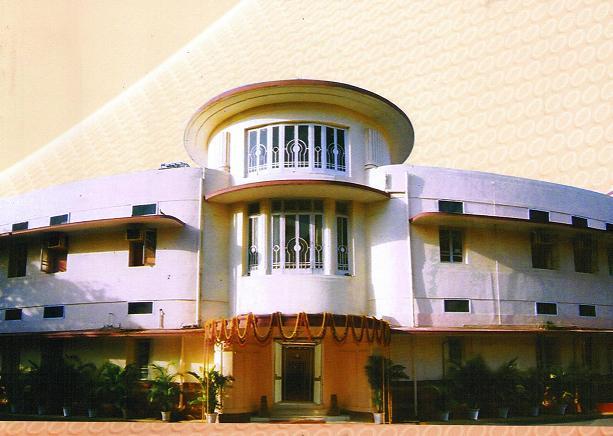
Dholpur House 

Friday, July 5, 2013

The Sin of Wastage

(The following post was written for Scroll 360 on the occasion of World Environment Day, celebrated each year on June 5th. I wanted to share it with the readers of my blog here because of the issues it raises and the awareness it attempts to create)

Ouch! That much of waste is sure to hurt. It does. No, it does not hurt you. It did not hurt me till sometime back, but now, each time I see a morsel of food being fed to the bin, my heart screams out in protest. Do you know whom all that perfectly-eatable-passed-of-as-trash food hurt? Those significant millions languishing in Asia, Sub-Sahara Africa, and even in otherwise prosperous nations, whose skin is just clinging desperately to the bones as a last ditch attempt to stay alive. They have nothing called flesh on their body. All they have is an ignominious stripping off of basic human rights of living. Even as someone begins broaching the topic of food scarcity and food security, it is impossible to not recall to mind the simple words of the Mahatma – Nature has enough for everyone’s need, but not for everyone’s greed.  

            I am a foodie – a big one, mind you! There is a favourite anecdote my mother often relates in front of family gatherings, much to my absolute mortification. As a child, a really small one, I had once gone for a wedding where I was too short to be able to reach the extravagant culinary displays. What was in my reach, was however, a bin, where people were dumping their food-laden plates. Next thing my parents discover, I am not just eating out of it, but relishing the food too! I was rescued, mildly rebuked for a minute, and then I found myself amid loud guffaws. What was amusing, however, for a gathering with no crease of remorse on their faces for wasting criminal quantities of food is actually a way of life for an unreal number of people out there in the world. We all have that one moment where we see a significant change in the way we perceive the world, that makes us look within, that moment when something breaks inside us only to give way to something better. My moment came while reading an old case study, where acute food scarcity in southern India had driven a man to consume his own faeces. Try as hard as I might, I can never shake off that image – and I would love to impose it on the minds of those who throw away eatables as a routine.


            Why is today a good day to talk about food wastage and the need to put curbs on it? Well, that is because today is the World Environment Day, as declared and observed by United Nations Environment Programme (UNEP). The WED was conceptualized in 1970s. Besides carrying the intrinsic message of saving the environment, it also observes distinct themes each year to address agendas of pressing concern. This year, UNEP has declared ‘Think. Eat. Save.’ as the theme to be followed for WED across the globe. Ian Somerhalder, the hot and irresistible Damon Salvatore of Vampire Diaries fame, is the celebrity face of the ‘Think. Eat. Save’ campaign. He also runs a foundation the aims of which, as he puts it, are as diverse as the plants, humans and creatures of earth face. In a UNEP release, Somerhalder quotes, “It is absolutely nuts that 30 per cent of all food is thrown away. That translates into $48.3 billion. Can you imagine what we could do with $48 billion. Can you imagine the decrease in pesticides, water and land use if we no longer needed to produce that 30 per cent that is just ending up in the bin?

            Now, do not take these statistics lightly. What is being implied above is that almost one third of the food production of the world goes waste. Waste! And in measures big and small, we all contribute to it. Now, try reading the last few lines of the second paragraph of this article all over again, and think how criminal it is to be a party to something which is avoidable by little, conscious efforts on our part. Especially being inhabitants of India, that instance could not have dwindled in our memory where large-scale rotting of grains in India was reported against a backdrop of repeated dismal performances on indices of child health, nutrition and mortality.

Blame it all on the government if you please, but check the next time you head out to splurge money on junk, part of which contributes to unhealthy fats in your body, and the other part of which contributes to overflowing trash cans. Go out to buy fresh veggies every once in a few days – make sure you buy only as much as you can guarantee will not rot in your latest refrigerators. You could also call up your mother or grandmother for interesting recipes on how to use leftover food from fridge to make interesting delicacies. I was glad to see an entire episode of MasterChef India dedicated to reusing leftover food in unimaginable ways, a method even Sanjeev Kapoor endorses in the many recipes he prescribes for his followers. If there is no one else to guide you, contact me. My mother, recently, churned up yummy masala fritters made with nothing more than boiled rice and vegetables which were left from a day earlier. Interestingly, there is a day observed by my grandmother, called ‘Basoda’, where she eats only food from a day before. I might not know the myth, but the thought behind observing the day is both, cool and rational.          

In my understanding, even waste is not waste. What is the most common image of waste in our heads is the best source of nutrients for soil when used as manure. I hope everyone understands that technically, you cannot throw waste ‘out’, because there is no ‘out’, unless you know some technique of launching it in space, that too, not without consequences. Using kitchen waste to make compost is an age-old technique – only we’re too busy to follow it. May I ask why? Is it because you are sure that a cataclysm will skip your generation and strike the next, from which you snap all ties of kinship?

This is what UNEP website says – ‘According to the UN Food and Agriculture Organization (FAO), every year 1.3 billion tonnes of food is wasted. This is equivalent to the same amount produced in the whole of sub-Saharan Africa. At the same time, 1 in every 7 people in the world go to bed hungry and more than 20,000 children under the age of 5 die daily from hunger.


I wish you all a very happy World Environment Day, and exhort you all to take some decisions which is retrospect, you are all very proud of. Days like this remind us that time to act cannot be postponed indefinitely. Perhaps time to act is now.
http://www.ynaija.com/wp-content/themes/YNaija2012/images/logo.png

Saturday, April 13, 2013

Green Is The Colour!


Have you heard of a strange phenomenon where a predator befriended its prey? I am forgetting the minute details, but it so happened in a recent incident somewhere in  theinterior hinterland of India that a wolf, who, while pursuing his quarry, a goat, fell into a deep ditch along with it. Rather than attack and devour his now confined prey, the wolf and goat were found in a perfectly amiable condition by surrounding villagers the next day. My fantasy guess is, the wolf and the goat might’ve helped each other find a way out. Anyway, truth is self-preservation took precedence over hunger qualms. The animals ‘adapted’.

All animals, with the glaring exception of homo sapiens, have learnt the art of perfect harmonious cohabitation with animate and inanimate elements of their surroundings. Even a lethal carnivore would not hunt for pleasure’s sake; if satiated, he would allow without care for a whole herd of prey to pass by. So have discovered animal behavioral scientists. Even our ancestors had practiced and advocated harmonious coexistence with nature. For them, each animal, even plants were a part of the larger family order Providence itself has ordained for us. However, somewhere during evolution, our very race lost touch. In a bid to prove our mental (intellectual) superiority, we became the predators hell bent upon feeding on those very constituents of Nature which caused and sustained our existence.


Sustainable Development is one of the key governance issues which each government across the world has to deal with both at a macro and micro level. I understand the ‘janta’, masses form an indispensable component of any country’s democratic set up, considering just democracies for the time being. The definition of public is not confined to their role and responsibility as the electorate. That is to say, our act on the democratic stage does not end with casting our vote. It goes beyond, and extends up to the point where we adopt the character of a citizen who acts responsibly in all spheres of life. Sustainable Development, growth while preserving resources so as not to encroach upon the endowments of future generations, as a concept encompasses many nuanced, technical aspect which the government has routinely been failing at throwing enough light on. In the same sphere, civil society activists have been doing a remarkable job of protecting, preserving and propagating awareness about what is our natural heritage.

However, these scribbles are not to lambast the government for what is another possible area of policy paralysis. Or of yawning gaps between policy and practice. We, as a nation, pride upon on our vast and diverse resource rich state. Scant do we pay regard to the possible problem that are woven into the fabric of that very diversity. Our country is such where the topography changes every ten steps (little exaggeration, if you permit please), and cultural identities and practices change sooner. Talking of curbing carbon emissions at a global stage is one thing; developing action plans for what could be a major problem plaguing just one sequestered area in a nondescript corner of our country quite another. Take the example of the Ladakh valley, where environmental problems are a particularly new phenomenon, caused largely due to the massive influx of tourists in the area. Now, since Leh-Ladakh are not playgrounds from which political gains could be usurped, regards paid to the local issues of this place which boasts of having evolved its own specialized gene pool are nothing more than mere lip service. Consequently, the onus for preservation and prevention falls on indigenous population and motivated volunteer groups.

That aside, environmental preservation is one area of activism all of us can partake in, even within the smug confines of our home. Let not shifting responsibility become a favorite sport as far as concerns of or dwindling resources go. I’m sure most of us reading this article would be conscientious, educated, and liberated people doing their bit for the environment. April 22 is celebrated as the Earth Day each year, the concept pioneered by John McConell, and crystallized by U. Thant, former Secretary General of United Nations. What better time can you find to heed the call of Mother Nature for protection? Do me a favour. Choose one from the below listed many pledges which are simple to observe and healthy to adopt as permanent practices in the interest of our depleting ecology. I think I am going to stick to most of them, and more.

I pledge to translate Earth Day messages to local language and spread them among as many as I can.

I pledge to use paper carefully and responsibly and motivate others to do the same.

I pledge to become the Electricity Nazi at home and ensure that no wastage occurs under my nose.

I pledge to celebrate my birthday (which is around the corner) by planting a tree.

I pledge to celebrate birthdays of my friends by gifting them saplings.

I pledge to reduce the consumption of plastic unless where absolutely indispensable.

I pledge to never, ever, ever, ever litter anywhere I go, even if the place seems like a garbage dump already.

I pledge to not find it below my dignity to be corrected on practices against the environment and assume responsibility for undoing potentially harmful actions of mine.

I pledge to make environment a bigger cause in my heart and mobilize support for the same.

I pledge to never give into practices like smoking which harm not just me, but also others and the environment through a passive route.

I pledge to use public transport as much as possible.

I pledge, particularly me, to read up on green legislations and green social sector initiatives so that I can call myself a green literate before I go onto spilling gyan about green practices to others.

Image Source - Aaqib Raza Khan photography.