Showing posts with label Rupa Publications. Show all posts

Thursday, July 18, 2013

What Young India Wants by Chetan Bhagat - A Review

"What Young India Wants? Its money back!"

So went a joke on twitter, sent my way by good friend and active tweeter, @tarique_anwer. Essentially, the young India, which had been eagerly waiting for Chetan Bhagat's first non-fiction publication was so disappointed in this flimsy attempt that, instead of these trivial essays, they wanted the ₹140 they spent on this book back. Which young India was awaiting the release of this book, you ask? Well, the one to which I belong was. Rather enthusiastically. There may be several reasons for that - the basic being, I loved Chetan Bhagat from his first through to his last novel. What I definitely did not take into account was the fact that I had never been exposed to his kind of political or social writing, which, defined at best, is average.

There are many things wrong and disappointing about this book. However, since I am a firm believer in silver linings, let me tell you what I loved about it. I loved the thought behind his words. Not the words, just the thoughts and the apparent drive which made him, rather bravely, attempt essays on fields as diverse as social networking, politics, education, gender issues, market economics, psychology and much else. All this vast expanse of topics was, unfortunately, ruthlessly compressed to fit a rather small space. However, before delving into negatives with full force, I would like to point out another thing which I found good - in fact, the only place where I felt any connect with the book. It was the short autobiographical essay which Bhagat has written about himself, recounting his struggles and achievements unabashedly and with minimum pretension. I have a proclivity towards such people, so much so, that Bhagat was almost successful in establishing his credibility as a social-economic-political commentator.

Naive fallacy of a hapless fan. The back-cover extols the book as a collection of Bhagat's 'widely read' columns across newspapers. I don't doubt that his article contributions to leading national dailies had a stable audience, but that is not because he is an expert or an insightful man. That is because he is popular and easy to read. He writes like I might. He connects with the youth (like he claims) because of his passionate discourses, which are rich on emotions, but devoid of substance. I am not being too harsh on the author - because I know I genuinely admire him for the kind of readership revolution he has brought out in urban India. I also relate and associate with the passion he holds for the country that is India - infectious and easily understood. However, when you delve into the finer (or even shallower) points he makes, you will realise he is not saying anything which is innovative, or which may work as an epiphany. Now, writers, especially columnists should mandatorily be of a stature where they stir the brains of readers. What I mean is, that writing should be capable of producing a change.

Nothing changed in me after I read this very gloriously titled book. Except for the fact that I will be wary of Bhagat's books in future. His effort at covering those many topics is commendable, but that is exactly what also works against him. When he takes up issues of such importance, and then wraps them up even before they can grow on you, it seems a nonsensical endeavour. Too little of too much packed together - thats what this book is.

Replete with personal anecdotes, Bhagat does strive to establish a cord, but fails in the larger picture. Another element which is totally frivolous and which harms the credibility of the author to the maximum are the two pieces of short fiction printed after the mini-essays. The stories, if I am too generous, I would say, are okay. The first one still better, but the second one aimlessly searching for reasons to be included in the book. Fiction is Bhagat's domain, and I know for a writer of his calibre, it would not be difficult to create a fictional narrative on an issue of social relevance. In fact, he takes up social issues routinely in his novels. In this book, however, he again disappoints in the area which is known to be his stronghold.

Summary - 2 star on five. There are much better books in the market which deal in a more in-depth and specialised and even interesting manner with the issues Bhagat picks up here. Hunt for those and skip this one.

Book Details -
Author - Chetan Bhagat
Publisher - Rupa
Published - 2012
Book Source - Review Copy
Genre - Non-fiction/Current Affairs/Essays 
Price - Rs. 140
Pages -  181

Thursday, January 3, 2013

In Black and White by Rudyard Kipling - A Review

He was the youngest recipient of Nobel Prize in Literature, the first writer of English language to have that honour conferred on him. My inspiration in writing, Ruskin Bond, found inspiration in his writing. And if I had one regret emanating from the world of literature (which I know is vast and perhaps has no place for regrets), it was that I never got an opportunity to read any work of the great storyteller Rudyard Kipling. However, in a recent set of book Rupa Publications sent me for review, I got my chance to overcome that regret.

In Black and White is my first tryst with Rudyard Kipling, and what a grand, memorable meeting with the master-storyteller it has been. Kipling has been regarded as an innovator in the art of short story writing, and this book is only one of the many examples which lends credibility to that statement. In Black and White is a collection of some of Kipling's finest stories which shed light on the social, cultural and political fabric of India, as it was woven under colonial rule. The imperial conquest of power etched a firm, and almost cruel boundary between the ruler and the ruled - a reality which stories of this book bring out vividly. The language, I will have to admit, was not the easiest to understand. In fact, if anything, it was most abstract, but that is what gave space for philosophical ideas to run parallel to the main narrative of extremely engaging stories. A miner, a priest, a missionary, a betrayed and revenge seeking lover - each character has been drawn deep from within the womb of humble Indian terrain and represent in full the idiosyncrasies of Indians. The tales are endearing at times, witty at others, and scathingly ironical at certain places. Kipling presents both - the inherent innocence of Indians and the corruption which started taking roots under the reign of the Raj in these 8 short stories

The Whole Range of Kipling Special Books 
It is a small book, priced humbly, to invite readers to the enamouring, but critical world of Kipling. My favorite among all is a story called "Dray Wara Yow Dee". Don't ask me what that means. I just know I enjoyed this tale of a lover betrayed, seething with revenge. For the first time, it was not poetry, but prose in which I found an unmistakable lyrical quality.

Kipling has a controversial place in History. He is credited with a doctrine which not just justifies, but glorifies imperial conquests. Given his philosophy of 'A White Man's Burden', I have always wondered how is it that Kipling wrote of nothing but India and its people, so much so, that many literary connoisseurs bracket him in the Indian Writing in English category. A man, not wedded to the sensibilities of this magnificent land could not have possibly written literature which seems like our own. Perhaps this dichotomy in Kipling's writing is best understood in the words of one of my English teachers, who warns with affection - History often doesn't give us the chance to alter our opinions, we must learn to be careful with them.

Its a 3.5 on 5 star book for me.

Book Details - 
Author - Rudyard Kipling (With an introduction by Ruskin Bond)
Source - Review Copy
Genre - Literary Fiction/Short Fiction
Publisher - Rupa Publications
Price - ₹ 140
Pages - 118 (8 stories)
Rating - 3.5/5

Sunday, December 30, 2012

Best Of The Written Word from 2012


The world of books has always had a fantastical appeal for me. It is rich, wide, effervescent, dynamic, real, imaginative and so much more. Books are a panacea for troubled souls like me. They are constant companions – on journeys, in college and in bed too. For me, books are also a way to look back at a great year and relive fond periods by remembering the books I read then and how they affected and enriched my thought process. Here, I share with you the best picks of the written word from the year 2012, in two sections. The first of these two sections comprises of my pick of the critically acclaimed books from the past year, and the second section has my favourite five from the popular fiction category. If you missed out on any of these this year, worry not! Procure them still, for the written word does never lose its charm.

Critical Recommendations

Breakout Nations by Ruchir Sharma
In this record-making bestseller, Ruchir Sharma takes his readers on a tour of more than two dozen emerging market economies. Weighing in on economic and political factors, Mr. Sharma addresses the timeless question of what is it that makes some states succeed and others fall. In a very methodical narrative, this book tracks the basic data of these countries to suggest if these states are likely to sustain growth momentum or lose it gradually. It is an intensive book, thoroughly engaging for those with an interest in economics and geopolitics and one of the most read books of this year.
Publisher – Penguin
Price – Rs. 599

Narcopolis by Jeet Thayil
Though criticised for lack of a coherent plot from more than one corner, this book is still high on my list of recommendations. This book not only managed to catch ample amount of international attention, but also realistically took its readers to the darkened alleyways of the drug-culture of Bombay, in a whirlwind commentary of abuse, sex, violence, love and death. There are many who were outright disgusted by the book, others left with mixed feelings. However, there is a great section of literary critics who paint this part cacophony, part symphony – Narcopolis – in glorious words. Not a must buy book, but a must notice book for all.
Publisher – Faber and Faber
Price – Rs. 499

           Joseph Anton by Salman Rushdie
Besides his deft writing, another thing which has given a definitive spurt to Rushdie’s image (and perhaps credibility) as a writer is his infamous tryst with a fatwa. Of all his works, The Satanic Verses is perhaps the most popular – not because people have read it, but because of the controversy which hijacked the literary merit of the book. In Joseph Anton, a biographical account, Rushdie shares his version of the story. And this attempt at telling an honest story is more gripping than most thrillers you would come across.
Publisher – Jonathan Cape
Price – Rs. 799

 Behind The Beautiful Forevers by Katherine Boo
Slumdog Millionaire opened the international audience to the dirt and squalor rampant in India. In her book, the Pulitzer Award winning author, Katherine Boo takes her readers on a microscopic expedition through the same decrepit world. This book centres on a slum called Annawadi, languishing somewhere in the underbelly of Mumbai and narrates the story of Abdul, who has a heart full of hopes and hands full of recyclable trash.
Publisher – Penguin India
Price – Rs. 499

             Return of A King by William Dalrymple
To be honest, I have not read this one. But Dalrymple is the kind of author whose works create buzz even before they hit the market. From the little I have read about the book, via tweets and reviews, this saga of the first Anglo-Afghan war is sure to keep you riveted. It also promises to provide you parallels in the contemporary world of an anachronistic event. Dalrymple has based this book on extensive research and facts gathered from all corners of the world. I am definitely going to lay my hands on this one as soon as I can!
Publisher – Bloomsbury
Price – Rs. 699

The next set of books is my favourite five from among those I received for review in my capacity as a book blogger. I must admit, the kind of talented writers being unearthed by publishing houses in India is incredible. The reading culture is on a high trajectory and so is the publishing industry. Yes, a lot of crap gets churned out in the process, but hey, I am here to pick out few of the better ones for you!

      The Taj Conspiracy by Manreet Sodhi Someshwar
Even before I thought of making this list of the best, I knew this book would be on it! Manreet, a writer of tremendous reckoning, created an indigenous, gender variant of Robert Langdon – named Mehrunisa Khosa – who sets out to unravel a mystery woven around the Taj Mahal. Mehrunisa is a renaissance expert, and is well versed with the legends, facts, and myths surrounding this great monument of love. Find a hint of Ludlum, and sprinkling of Dan Brown, but a thoroughly enjoyable and fresh script of death, deceit, mystery and thrill in this book by Manreet.
Publisher – Westland
Price – Rs. 250

Roll of Honour by Amandeep Sandhu
This is the second novel of author Amandeep Sandhu, and it takes a reader through the rough terrain of perhaps the most violent decade in India’s history since independence. Set against the backdrop of a decade which witnessed gory events including Mrs. Gandhi’s assassination and the consequent anti-Sikh riots, Sandhu narrates the story of Appu, a school prefect entering the senior most year of his military school, and his attempt to come face to face with his identity, his battle to preserve his friendships with friends from other religions amid venomous, vehement and provocative speeches made by his fellows influenced by the ideology of Khalistan. Vivid and hard hitting – the message of this book stays strong with me, months after reading it.
Publisher – Rupa Publications
Price – 275

           Marathon Baba by Girish Kohli
This is perhaps an unlikely entry on this list, but I cannot possibly ignore a book which began entertaining me from its first line and did not stop till the very end. Earmarking itself in the category of ‘kick-ass’ fiction, Marathon Baba, besides being a laugh riot, is an immensely witty and engaging book. What is it about? Well, it is about a man on the run, who has been warned that running is injurious to his health. Rest, I cannot possibly describe this awesome book by Kohli in any fitting words. This is the kind which has to simply be read and enjoyed!
Publisher – Fingerprint
Price – Rs. 150

Asura by Anand Neelkantan
This book is on my list of the best because of the skill, innovation and experimentation of the author, which lent a new hue to our ancient revered epic - Ramayana. Asura is the story of Ravana, his tails, travails, his failings, his ascent to power and his eventual defeat. This book should not be confused to be a mythological treatise – it is a light, intriguing read which fictionalises mythology to develop an easy narrative for entertaining a reader and making him empathise with the Ravana side of the story. I did think the concept of the book had more potential to be exploited. Having said that, this is definitely one of those books I will remember from this year.
Publisher – Leadstart
Price – Rs. 250

      Urban Shots Bright Lights (Edited by Paritosh Uttam)
This book is an anthology of short stories set against the urban landscape of India. It is one of the four books published under the “Urban Shots” series, giving a chance to several promising young writers to have their work published. The collection of stories in Bright Lights was the best of all the four, and I am bound to say it because one of the best short stories I have read in life – called Father of My Son – was its pick of the stories. The stories in this book cut across cultures, across feelings, faces, incidents, musings, recollections, realizations and much else. Few stories attempt to touch, few attempt to teach; but almost all attempt to give you a personalized glimpse into the life of a common, yet unique Indian inhabiting one little corner of the crazy cultural panorama that the Indian landscape is.
Publisher – Westland
Price – Rs. 199

As I always say, let’s make ours a book friendly world.
Have a great book-filled 2013!

Tweet to me at @Saumyakul
Read more of my articles at Scroll360.in

Sunday, October 7, 2012

Roll of Honour by Amandeep Sandhu - A Review

It does not happen often that I have no clue as to how I should begin a post, especially a post pertaining to my thoughts on a book. Mostly, I am clear about the impression a book has formed on me. I can be good or bad, but in long I have not come across anything that has made an 'extremely good' impression on me, and has impacted me deeply. A book can be more than mere entertainment. It can make you think. And it can stay with you for long, long after you have turned over its last page.

Roll Of Honour - the second novel of Amandeep Sandhu falls precisely in the category of books which stimulate you, and which effortlessly linger on.

The 1980s were one of the most violent decades in India. They began with Operation Blue Star, undertaken by Mrs. Gandhi's regime to crush the movement for an independent Khalistan - a sikh land. This was the decade in which Mrs. Gandhi met her end, assassinated by her Sikh body guard, and it is the very decade which saw brutal violence being unleashed on Sikhs in India, particularly those residing in Delhi, in what are remembered as Chauraasi ke Dange, or the Riots of '84. Perhaps, this also happens to be the decade in which the Hindutva bandwagon acquired steam and sowed those seeds of communalism which culminated in the Babri Masjid demolition in early 1990s. However, aside from this last vestige of the 1980s, Amandeep Sandhu's book does a brave of job of combining the earlier three - Operation Blue Star, Mrs. Gandhi's assassination and Riots of '84 - into a narrative which steers clear of transforming into a political discourse. It simply seeks to throw light on the impact of the riots, on not just life, property, family and relationships, but the very identity of the hapless people, who were forcibly made a party to political ambitions of a few.

Appu is entering the senior most year of his military school in Jassabad. He was supposed to be the school prefect, but due to some unexpected changes in school structure, his authority has been limited to being the in-charge of his class. Besides being the school prefect, he only looked forward to one thing - finding a place for himself in NDA when he passed out from his school. That is what his teachers and trainers over the years had prepared him for. However, the events of 1984 bring many unforeseen alterations in his life. He finds himself giving refuge to an ex-student, Balraj, who is now a Khalistani militant escaping the army. A school which functioned with pride and in isolation, now sees its very basic dynamics being affected by the events taking place outside. Sectarian loyalties are ignited and old pals are forced to take sides. Amandeep also paints a gruesome picture of the bullying which takes place in school - activities unspeakable, some which made my stomach churn. The intoxication of seniority in Appu's school led to an acute urge for dominating the minions - mentally, physically and sexually. Punishments, or ragra, as they are mentioned in the book, were a given and they were ruthless enough to cause bleeding, broken bones and medical centre trips.

And on this entire canvass of violence was running another, important story - a 17 year old boy's attempt to come face to face with his identity, his battle to preserve his friendships with friends from other religions amid venomous, vehement and provocative speeches made by his fellows influenced by the ideology of Khalistan. His dream lay shattered, and he moved ahead without an iota of knowledge as to where his future was located.

Amandeep's writing is sensible, as well as sensitive. In this book, he raises questions, but does not attempt to provide all answers. His narrative is lucid - it casts on the readers' minds vivid images of violence being perpetrated at the surface and subterranean levels. Appu, the narrator, is a real person - he has his questions, he has his confusions, he has his faults and he is constantly looking for answers. I think what brings Appu to life is the fact that this book is part autobiographical, part fiction. What begins as as tale of school boys battling out their own concerns and stresses goes on to become a much grander picture of the realities as they exist in a land which has conflicts at its very crux. As is aptly put on the back cover, this book 'is a frank examination of the consequences of misplaced honour, allegiance and integrity.'

It is a 4 on 5 stars book for me - and these ones come my way rarely. I can't say it was a pleasure going through this book, for this book was meant to disturb me. It did well on that count. The basic storyline of the novel is interspersed with italicized musings of the narrator, Appu. These are sections which will hit some raw part of your heart. They will echo something which you too might have deeply felt. These are, perhaps, those sections of the book which will make you as big a fan of Amandeep as I have happened to become.

Book Details -
Title - Roll  of Honour
Author - Amandeep Sandhu
Publisher - Rupa
Price - ₹ 275
Pages - 240

And finally, a fond click!
Amandeep, me and his book, at a book reading organized in Jamia Millia Islamia


Tuesday, September 18, 2012

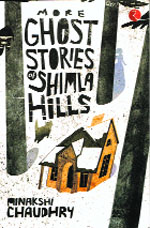
More Ghost Stories of Shimla Hills by Minakshi Chaudhry - A Review

This book, I believe, is a sequel to an earlier book with a similar theme. Not restricted to hills alone, most places in India have myths, legends and stories surrounding their existence. People inhabiting such places occasionally refute, but mostly subscribe to popular beliefs, even when they allude to something unthinkable - as in supernatural. A story surrounding ghosts and spirits is a listeners delight! However, it could be a nightmare for the one who lives through it. India is a land which believes - in Gods and spirits. Unravelling this very facet of Indian hills - Shimla to be specific - Minakshi Chaudhry has come out with a collection of tales about ghosts and apparitions, collected by meeting people and hearing their stories.

Shimla, formerly Simla, the Summer Capital of the British, and now the Capital of Indian state of Himachal Pradesh, is a top tourist destination in India. Home to many colleges, research institutions and temples, Shimla is also one of the top entrepreneurial destinations in India. Beyond what is known to the outside world about this scenic hill station, there are many facets of this place known only to the locals, and perhaps, also understood only by the locals. Shimla is home to many ghosts and spirits, who have entrenched themselves in the local lore. These ghosts do not have a mythological origin; mostly they are an expression of unfulfilled objectives of life of persons belonging to the British or post-British era. Ghosts depicted in this anthology of short narratives are not a negative force - there are many who are caring and benevolent. Spirits are sometimes whimsical and other times they manifest only when disturbed or disrespected. It is easy to talk with conviction about their existence once you have immersed yourself in the fantasy world created around you by this book.

The narration of the book is light, and in parts capable of transporting you to the pleasant climate of Shimla. The stories, though interesting, I would admit, are not captivating. Despite being a small book, I took time to finish it, because, despite dealing with something as intriguing as ghosts and supernatural, it could not form a relation with my imaginative mind. This book is more suited for a younger audience. As an adult, I would have revelled in more literature about a legend, more knotted tales. Most of the apparitions talked about in this book are flat characters, with no shades to them. The narrative mostly is informative and descriptive, lacking an element of mystery and thrill. Very few stories, if any at all, would remain with you, as anecdotes to pass on to other people. An okay read, I would award this book 2 stars on 5. Somehow, Ruskin Bond completely captures your imagination when it comes to tales about hills, especially ghost stories. A comparison with him is inevitable if a similar genre is picked up by any author, and to live up to that comparison is an arduous challenge indeed. Good effort, with some lost potential, I would say.


PS - I am confused, do you call such a book, drawing on local legends, fiction or non fiction?

(Reviewed on request from Rupa Publications)

Book details-
Title - More Ghost Stories of Shimla Hills
Author - Minakshi Chaudhry
Publisher - Rupa
Price - ₹ 150
Pages - 147


Thursday, June 21, 2012

A Mystery Too Unmysterious

A Mysterious Death At Sainik Farms
by Rukmani Anandani
A Review

The season of mysteries and crime fiction has had an extended presence for me.The last, the current and the next book I will review, all belong to this genre. The specialty of this category of books is their inherent quality of lending some adequate doses of thrill to a person's otherwise mundane life. The danger of this genre is that the thrill if not appropriately developed, can fall flat on its face and annoy a reader. With the book which I am reviewing at present,my experience tilted towards the latter extreme.

A Mysterious Death At Sainik Farm is a murder mystery penned by the multifaceted Rukmani Anandani. The title is as lucid as it gets. In fact, it is a single phrase which gives you the plot of the book. This book is about the investigation of the murder of Ugrasen Arora, a wealthy businessman based in the posh Sainik Farms area of Delhi. The murder is brought to the notice of a private investigator, Ganapati Iyer, by Ugrasen Arora's beloved niece, Anjali, whose curious mind and affection towards Ugrasen turn her into a quasi-detective, aiding Ganapati in little but crucial ways. Ganapati is also aided in his investigations by his North Indian namesake and friend- Vinayak and the local Assistant Commissioner of Police, Bijon Dasgupta. Apart from these, a bevy of characters, all the murder victim's family members, are introduced in quick succession in the plot, and are, obviously, scrutinized as the prime suspect for Ugrasen's mysterious killing. A missing bag of rubies, an open safe, a missing will and the presence of an outsider - Jasleen - in the book, all contribute towards making the storyline more saucy.

However, without masking my disappointment, the first thing I would like to assert about this book is that it does not manage to let the mystery simmer adequately. Before the dish is cooked, an aroma of what lies beneath the lid manages to hit the reader's nose, all too easily. It happened with me. If you have even a minimal exposure to crime fiction novels, and a curious head which attempts to solve a murder mystery by its own, you will be able to figure out the killer much before the phrase 'plot thickens' could be applied to the narrative. And that is where this book looses out majorly.

The characters have been scripted nicely, so a thumbs up to the author for that. You will find a lot of medical jargon in this book, which will make the tale sound, both, intriguing and authentic. Many quote's from Thiruvalluvar's Kural find entry into the script, lending an otherwise dreary mystery an pinch of philosophy.

I would not call this book a page turner. This book will not leave you sleepless or steal your calm till you find out who the killer is. Ganapati, the lead investigator, is whom I understand to be the protagonist of the novel, and his character has been fashioned impeccably. However, a totally unnecessary love angle (supposedly) is weakly built around him, which serves no purpose in the narrative, not even that of a distraction. I could not place it anywhere, except for a useless attempt at adding some masala. I would have given it fewer, but for two things, I would rate this book with 2 stars on 5. These two things are- a good insight provided into medical details of the murder which reflect rich knowledge or research on the part of the author and for the locational setting of the book (South Delhi) which brought to my mind vivid pictures of my time spent in that area. All in all, it is perhaps only an average book - one that you might want to skip.

(Reviewed on request from Rupa Publications)